
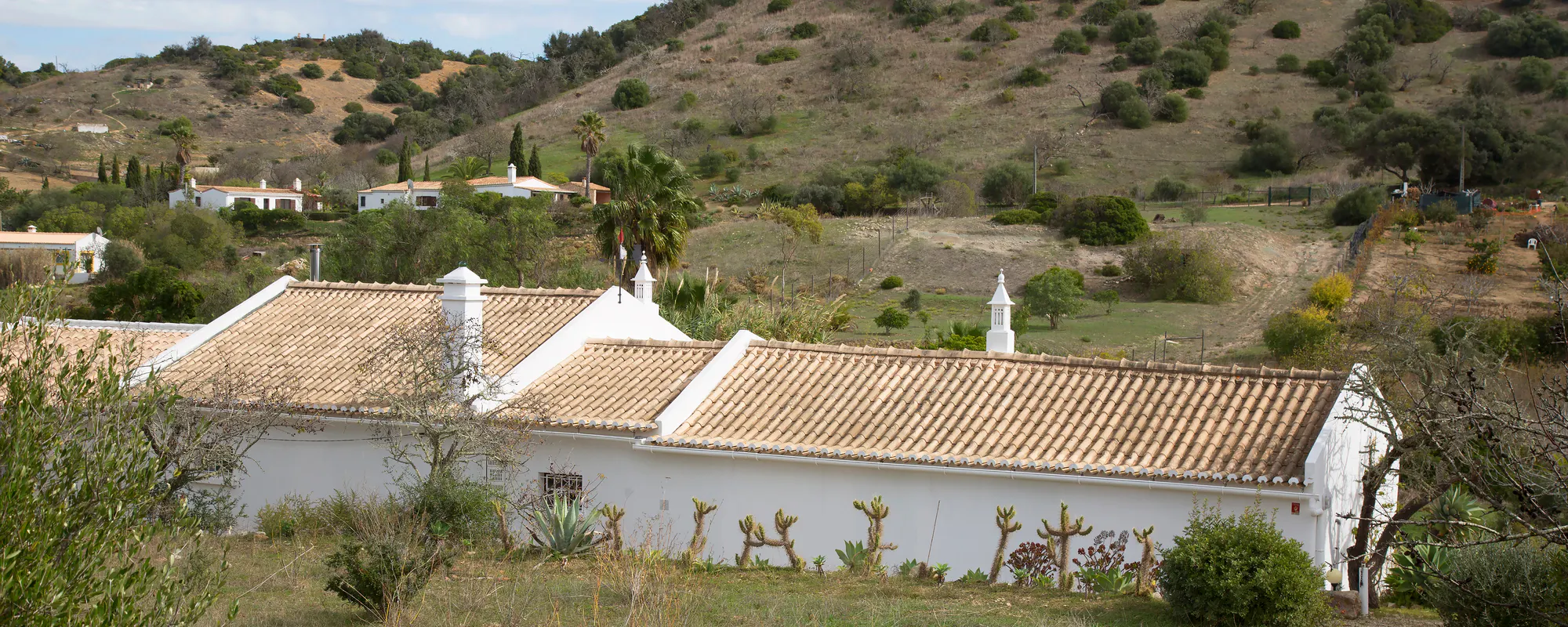
Illegal (Unregistered) Extensions in Andalucía
Does waiting six years before declaring them make them automatically legal?
One of the most common questions asked by buyers of rural property in Andalucía concerns old extensions, garages, swimming pools and outbuildings that appear to have been constructed without planning permission.
Estate agents often reassure purchasers that "it's more than six years old, so it's legal."
The truth is rather more complicated.
In many cases, the local authority loses the power to order demolition after a certain period of time if it has taken no enforcement action. However, that does not necessarily mean that the building has become legal. Understanding the difference is one of the most important aspects of buying property in southern Spain.
The Six-Year Rule
Under Andalusian planning legislation, the administration generally has six years to take action against an unauthorised building or extension. If that period passes without any enforcement procedure being started, the right to restore planning legality will often expire.
This principle has given rise to the popular belief that illegal buildings automatically become legal after six years.
They do not.
In most cases, the building simply becomes immune from demolition for urban planning reasons. The construction remains contrary to planning regulations, but the administration may no longer be able to require its removal.
AFO: Recognition Is Not Legalisation
This is where the concept of AFO (Asimilado a Fuera de Ordenación) becomes important.
An AFO certificate acknowledges that a building exists and that the time limit for planning enforcement has generally expired. It can make the property easier to mortgage, insure and sell, and may allow connection to basic services.
However, an AFO is not a retrospective building licence.
The structure remains outside normal planning regulations. Owners can usually carry out maintenance and conservation works necessary for safety and habitability, but they cannot normally enlarge the building, add new structures or substantially change its use.
For buyers, this distinction is crucial. A property with an AFO is often far more secure than one without any recognised status, but it should not be regarded as fully legalised.
Is It Always Possible?
No.
The six-year principle is subject to important exceptions.
The most significant concerns specially protected land. Buildings located within certain categories of protected rural land may remain vulnerable to enforcement action even after many years have passed. Environmental protection, coastal legislation, public domain rules and certain heritage protections can override the normal limitation period.
Similarly, some illegal developments involving protected landscapes or other sectoral legislation may not benefit from the usual prescription periods.
Every case must therefore be examined individually.
What About Extensions?
Many country houses have acquired additional rooms, enclosed terraces, garages or swimming pools over the years.
The same principles generally apply. If an extension was built without permission and the enforcement period has expired, it may be possible for it to form part of an AFO application. However, each element of the property should be examined carefully because different structures may have different planning histories.
A house may qualify for AFO status while a recently built swimming pool or guest annex does not.
Has LISTA Changed the Situation?
The replacement of the old LOUA (Ley de Ordenación Urbanística de Andalucía) by the new LISTA (Ley de Impulso para la Sostenibilidad del Territorio de Andalucía) has undoubtedly changed the planning landscape. The objective of the new legislation is to simplify and modernise the Andalusian planning system while bringing territorial and urban planning into a single legal framework.
For owners of older rural properties, the most important practical change has been a more pragmatic approach to existing buildings. LISTA seeks to facilitate the regularisation of many long-established constructions and simplify certain administrative procedures. It also introduces a simpler distinction between urban and rural land.
However, LISTA has not created a blanket amnesty.
It has not transformed every unauthorised building into a legal one, nor has it removed the restrictions affecting protected land. The six-year enforcement principle remains, but the fundamental distinction between legalisation and recognition continues to exist.
What Should Buyers Do?
When purchasing a rural property, particularly one with obvious extensions or outbuildings, buyers should establish:
- whether planning permission exists;
- whether the enforcement period has expired;
- whether the property has, or can obtain, AFO status;
- whether the land is subject to environmental or other special protection;
- and whether every structure on the property enjoys the same legal status.
A technical architect and an experienced property lawyer can usually clarify these issues before completion.
The Good News
The days when thousands of rural properties existed in complete legal uncertainty are gradually disappearing. The evolution from LOUA to LISTA reflects a growing recognition that many long-established homes form part of Andalucía's rural landscape and require practical solutions rather than endless legal disputes.
Nevertheless, purchasers should resist the temptation to believe the simple phrase that "after six years everything is legal."
In Andalucía, the reality is more subtle. Six years may protect a building from enforcement, but it does not necessarily erase its planning history. Understanding that difference can prevent expensive surprises and help buyers make informed decisions about their future home.